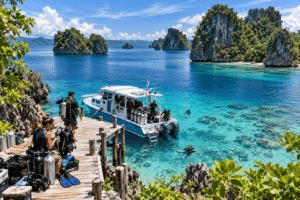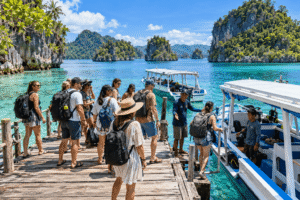
The Banggai Islands are the native home of the Banggai cardinalfish, a small marine species found naturally in this Indonesian archipelago. NOAA lists it as threatened, making it a reminder that underwater photography should document marine life without disturbing it.
For divers and ocean content creators, that changes the goal. A memorable photograph is not simply sharp and colorful; it captures a living subject behaving naturally.
These underwater photography tips banggai travelers can use cover camera settings, lighting, lenses, equipment care, and responsible diving. Whether you carry a compact camera or a mirrorless setup, thoughtful preparation helps you spend less time adjusting controls and more time noticing the scene.
Why Banggai Deserves a Thoughtful Photography Plan
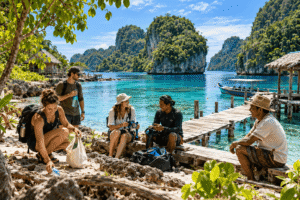
Banggai gives travel storytellers opportunities to connect underwater images with island scenery. Explorer Banggai features destinations including Pulo Dua, Kawalu Bay, Poganda Beach, and Paisupok Lake, alongside snorkeling and diving activities.
However, a sightseeing stop is not automatically a suitable scuba location. Ask your operator which marine sites match your certification, photography goals, and the conditions expected during your visit.
Build your story around contrasts: a reef detail, a shoreline landscape, and a quiet moment between activities. This approach gives your content variety without making every dive a hunt for a particular animal.
Underwater Photography Tips Banggai Divers Can Use
Start with a camera setup you can operate without looking constantly at the buttons. Familiarity matters when you also need to manage buoyancy, monitor your instruments, and stay with your buddy.
Before entering the water, decide whether you want reef scenes, small subjects, or video. That decision makes your lens choice and lighting plan much simpler.
Choose Camera Settings for the Subject
For still photography, shoot RAW if your camera supports it. Use manual exposure when comfortable, or begin with a familiar shooting mode rather than learning new controls during a dive.
As practical starting ranges, try:
- ISO around 100 to 400 in bright conditions, increasing it when available light requires.
- Apertures around f/8 to f/11 for reef scenes, adjusting for your lens and lighting.
- Shutter speeds around 1/125 to 1/200 second for moving subjects, within your camera’s flash synchronization limit.
Treat these ranges as starting points, not universal recipes. Review an early test image and adjust for subject movement, depth of field, and background brightness.
For strobe-lit photographs, balance foreground illumination with ambient light in the background. DAN illustrates how changing shutter speed can alter background brightness and the visibility of backscatter.
Match Your Lens to Your Story
A wide-angle lens suits reef landscapes and diver portraits because it lets you include a broad scene from nearby. Getting closer, without crowding wildlife or touching the reef, reduces the water and suspended particles between your camera and subject.
Choose a macro lens for small marine subjects and fine details. For compact cameras, compatible wet lenses can offer flexibility, but check housing compatibility before traveling.
Avoid switching photographic goals halfway through every dive. A dedicated wide-angle or macro session gives you more time to observe suitable compositions.
How to Light Your Images Without Backscatter
Backscatter appears when your lighting illuminates particles suspended between the lens and subject. Even an appealing composition can become distracting when those particles show up as bright spots.
The solution is not always stronger lighting. Position your strobes so their beams reach the subject while illuminating as little intervening water as possible.
Place Strobes Away From the Lens
Begin with strobes positioned to the sides of your housing and their fronts behind the port. Adjust the angles gradually, checking for bright edges, uneven lighting, and visible particles.
When photographing close subjects, reduce power if the foreground looks harsh. Moving closer responsibly and improving strobe placement often helps more than simply increasing output.
Use Ambient Light When It Works
Try ambient light when shallow conditions provide enough illumination or when artificial lighting creates excessive backscatter. DAN notes that switching strobes off can sometimes help avoid the problem.
For video, test your white balance and lighting before recording an extended sequence. Keep your clips deliberate: establish the scene, capture a detail, then let the subject leave the frame naturally.
When and Where to Plan Your Photography Sessions
Plan around current conditions rather than expecting every site to look like a promotional photograph. Ask your guide about visibility, currents, entry points, boat access, and suitable alternatives before departure.
Keep the itinerary flexible enough to change the order of activities. A photography-focused trip benefits from time to prepare equipment and revisit promising conditions instead of rushing between stops.
Also separate marine photography from lake and waterfall excursions in your planning. Explorer Banggai offers these different experiences, but they require different access arrangements and shooting approaches.
Who Should Prioritize Dive Safety?
Every photographer should place safety ahead of the shot. If handling your camera makes basic diving tasks difficult, simplify the rig or practice in controlled conditions before taking it on a demanding dive.
Maintain neutral buoyancy and keep your equipment clear of the reef. DAN emphasizes buoyancy control as a way to protect both divers and the underwater environment.
Agree on a photography plan with your buddy and dive leader. Continue checking your breathing gas, depth, and dive computer, and abandon a composition whenever staying with it would compromise the dive.
Protect Your Camera Before and After Diving
Follow your housing manufacturer’s instructions for seals, lubrication, assembly, and depth limits. Inspect sealing surfaces for sand, hair, or damage, and perform any recommended leak or vacuum check before entering the water.
Prepare the housing in a clean, dry area rather than on a wet boat bench. Carry suitable spare seals, charged batteries, memory cards, and lens-cleaning supplies.
After saltwater use, rinse the closed housing according to its instructions and dry it before opening. Keep the camera protected during boat transfers, and back up your photographs whenever practical.
Photograph Marine Life Without Changing Its Behavior
Never move an animal, rearrange its shelter, or touch coral to improve a composition. Wait for a natural position instead of creating one.
Give subjects room to retreat, and stop photographing if your presence appears to disturb them. The threatened status of the Banggai cardinalfish makes respectful observation especially relevant here.
Good technique also protects image quality. Careful buoyancy and restrained fin movements help prevent disturbed sediment from filling your frame with particles.
Plan a Photography-Friendly Trip With Explorer Banggai
Explorer Banggai offers open trips, private trips, and custom itineraries across Luwuk and the Banggai Islands. Its services include airport pickup at Syukuran Aminuddin Amir Airport, flexible itineraries, and transparent pricing without hidden fees.
Share your certification level, camera equipment, preferred subjects, and need for preparation time before booking. Confirm dive arrangements and inclusions separately so your itinerary supports photography rather than simply adding it between sightseeing stops.
The most useful underwater photography tips banggai visitors can follow are straightforward: know your camera, control your lighting, protect your equipment, and respect marine life. Contact Explorer Banggai through explorerbanggai.com to discuss a trip built around your underwater interests and travel pace.