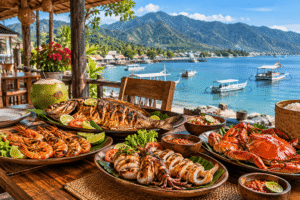
Luwuk Banggai is often celebrated for its crystal-clear lakes, white-sand beaches, waterfalls, and island escapes. Yet, between a sunrise at Pantai Poganda and an afternoon adventure at Air Terjun Piala, there is another side of this Central Sulawesi destination worth exploring: its deeply local food culture.
A memorable Luwuk Banggai culinary experience is shaped by two essentials: freshly caught seafood from the surrounding waters and traditional ingredients such as sago, corn, coconut, banana, and aromatic local spices. From smoky grilled fish to warm sago-based dishes, Luwuk offers comforting flavors that suit food travelers, families, backpackers, and anyone who wants to eat like a local.
Why Luwuk Banggai Food Is Worth Exploring
Luwuk sits on the coast of Central Sulawesi, so seafood naturally plays a major role on local dining tables. Fresh fish, tuna, skipjack, and reef fish are commonly prepared simply, then elevated with spicy sambal, lime, turmeric, coconut, and fragrant herbs.
At the same time, local dishes reveal the region’s connection to sago and corn as everyday staples. This blend of coastal ingredients and traditional cooking makes the Luwuk Banggai culinary scene feel approachable, flavorful, and different from the better-known food destinations in Indonesia.
Who Will Enjoy It Most?
Food travelers can discover dishes rarely found outside Central Sulawesi. Families will appreciate the variety of mild, grilled, soupy, and snack-style options, while backpackers can easily find filling meals at local eateries and traditional markets.
The best approach is simple: stay curious, ask what is fresh that day, and do not hesitate to try a dish that looks unfamiliar. Some of Luwuk’s most satisfying flavors are found in humble warungs rather than formal restaurants.
8 Must-Try Luwuk Banggai Dishes
1. Ikan Bakar Rica
Ikan bakar rica is a must for seafood lovers visiting Luwuk. Fresh fish, often snapper, baronang, or another locally available catch, is grilled over charcoal and served with a spicy rica-style sambal made from chili, shallots, garlic, and local lime.
The taste is smoky, spicy, tangy, and clean. Enjoy it with steamed rice, stir-fried kangkung, and extra sambal if you are comfortable with heat.
Where to try it: Beachside seafood restaurants around Maahas and Kilo 5 are popular choices, especially places that let diners choose fresh fish before it is grilled. Rumah Makan Kadompe near Pantai Maahas is also known for grilled fish and local dishes.
Price range: Expect a budget-friendly to mid-range meal, depending on the fish size, type, and side dishes.
Best time: Dinner is ideal, especially from late afternoon when seafood restaurants become lively and the coastal air is cooler.
2. Onyop
Onyop is one of the most distinctive foods to seek out in Luwuk. Made from sago, it has a soft, thick, jelly-like texture and is usually eaten with fish soup, vegetables, or a sour and savory broth.
For first-time visitors, onyop may feel unfamiliar at first bite. Give it a chance. Its mild flavor is designed to carry the taste of the accompanying fish, broth, and sambal, making it a comforting local alternative to rice.
Where to try it: Look for traditional seafood houses and local eateries along Pantai Maahas, where onyop is widely served with sour fish soup.
Price range: Usually affordable, particularly when ordered as part of a simple local meal.
Best time: Lunch is perfect when you want a hearty dish before continuing your trip to nearby beaches, caves, or waterfalls.
3. Milu Siram
Milu siram is a warm corn-based dish that shows Luwuk’s everyday comfort-food side. It commonly combines sweet corn with fish or tuna, fried shallots, and flavorful seasoning for a balance of sweet, savory, and slightly spicy notes.
This dish works beautifully as a light breakfast, afternoon meal, or snack after a morning of sightseeing. It is especially suitable for travelers who want something gentler than a chili-heavy seafood plate.
Where to try it: Traditional markets, neighborhood food stalls, and simple local warungs are your best bet.
Price range: Generally inexpensive and ideal for backpackers or travelers eating on a flexible budget.
Best time: Visit in the morning or around lunchtime, when market stalls and small food vendors are most active.
4. Sinole
Sinole is a traditional snack made from sago, often mixed with grated coconut and cooked until it becomes lightly chewy and fragrant. Its mild, earthy flavor makes it a good companion to coffee or tea.
Although simple in appearance, sinole offers an authentic taste of sago, an ingredient deeply connected to food traditions in eastern Indonesia. It is an easy choice for visitors who want to bring home a small memory of the Luwuk Banggai culinary experience.
Where to try it: Ask at traditional markets, local snack stalls, or small home-style food sellers.
Price range: Very affordable, usually sold in small portions.
Best time: Mid-morning or late afternoon, when you need a quick snack between destinations.
5. Lalampa
Lalampa is a grilled glutinous rice snack wrapped in banana leaf and filled with seasoned shredded fish, commonly skipjack. The banana leaf gives it a lovely smoky aroma, while the filling adds a savory and slightly spicy kick.
It is easy to carry, satisfying without being too heavy, and perfect for travelers with a packed itinerary. Think of it as a local grab-and-go meal with much more character than an ordinary snack.
Where to try it: Morning markets, roadside stalls, and small snack vendors are often the best places to find it fresh.
Price range: Low-cost and backpacker-friendly.
Best time: Buy it in the morning before starting a road trip to places such as Danau Paisupok, Pantai Teduang, or Gua Babanang.
6. Nasi Jaha
Nasi jaha is sticky rice cooked with coconut milk and spices inside bamboo, then roasted over fire. The result is fragrant, slightly smoky, creamy, and satisfying, with a texture that feels denser than ordinary steamed rice.
This dish is often associated with gatherings and traditional occasions, but it is also a rewarding find for visitors who enjoy regional rice dishes. Its smoky aroma pairs especially well with grilled fish or spicy sambal.
Where to try it: Seek it at local markets, traditional food vendors, or ask your local guide about availability.
Price range: Affordable to moderate, depending on the portion and whether it is served with side dishes.
Best time: Morning and early afternoon are the safest times to find freshly prepared portions.
7. Pisang Lowe
Pisang lowe is a local banana snack that proves simple ingredients can create a memorable bite. The banana is fried until golden and is often enjoyed with sambal terasi, creating an unexpected contrast between sweetness, crispness, saltiness, and chili heat.
It may sound unusual for visitors accustomed to sweet fried bananas. However, that sweet-and-spicy combination is exactly what makes it worth trying.
Where to try it: Local snack stalls and traditional markets are the best places to begin your search.
Price range: Usually very affordable, making it an easy addition to any food crawl.
Best time: Late afternoon, when you want a casual snack after a beach or waterfall visit.
8. Sup Ikan Kuah Kuning
Sup ikan kuah kuning is a bright, aromatic fish soup colored by turmeric and enriched with lemongrass, lime leaves, basil, and fresh local fish. The broth is light but flavorful, with a gentle sourness that refreshes the palate.
It is an excellent choice for travelers who want seafood without the intensity of grilled sambal dishes. Pair it with rice or onyop for a fuller local meal.
Where to try it: Seafood restaurants near the coast and family-run warungs are good options. Ask for the day’s fresh catch and choose a fish suitable for soup.
Price range: Budget-friendly to mid-range, depending on the seafood selection.
Best time: Lunch or dinner, particularly after a long day of snorkeling, hiking, riding, or island hopping.
How to Plan a Food-Focused Day
Start with milu siram, lalampa, or nasi jaha in the morning before heading out. These dishes are portable, filling, and easy to find around markets and roadside stalls.
For lunch, choose onyop with fish soup or a simple seafood meal near the coast. Save ikan bakar rica for dinner, when you can slow down, enjoy the sea breeze, and order several shared dishes for the table.
A Simple Local Dining Tip
Ask politely which fish arrived that day and how spicy the sambal is. Freshness matters more than a fixed menu, particularly at seafood restaurants, while spice levels can often be adjusted for children or travelers with sensitive palates.
Taste Luwuk Beyond Its Landscapes
A trip to Luwuk Banggai is not complete without tasting the flavors that local communities enjoy every day. From onyop and sinole to smoky lalampa and spicy ikan bakar rica, each dish adds another layer to your journey through this remarkable corner of Central Sulawesi.
Make your next Luwuk Banggai culinary adventure part of a wider escape to lakes, beaches, waterfalls, caves, and islands. Contact Explorer Banggai through explorerbanggai.com to arrange an open trip, private trip, airport pickup, or a flexible custom itinerary that gives you more time to discover the real taste of Banggai.