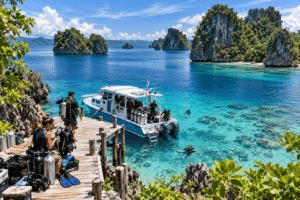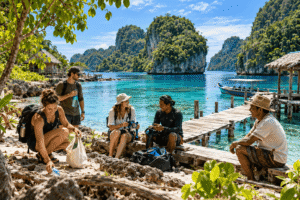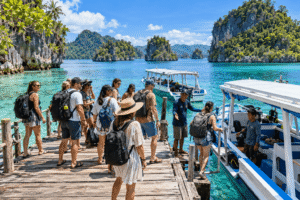
At Paisupok Lake, the water is so clear that submerged tree trunks become part of the photograph. Located on Peleng Island in Central Sulawesi, this freshwater lake offers something unusual: a landscape worth photographing both above and below the surface.
That is what makes the best banggai islands photography spots so rewarding. You can move from forest-framed water to white-sand beaches, then explore shallow marine habitats on a longer journey through the archipelago.
For photographers, content creators, couples, and nature lovers, the challenge is choosing where to spend your best light. This guide highlights locations, suggested shooting times, useful angles, access considerations, and equipment worth packing.
Planning Your Banggai Islands Photography Route
Your journey usually begins in Luwuk, with arrival at Syukuran Aminuddin Amir Airport. From there, ferry or speedboat connections take you toward the islands, followed by road transfers or additional boat journeys depending on your destinations.
Keep the geography in mind: Peleng and Banggai Laut belong to the wider Banggai travel region, but they are not interchangeable stops. Group nearby locations together rather than assuming every beach fits comfortably into one day.
The shooting times below are creative starting points, not fixed promises. Cloud cover, wind, water conditions, and the direction of the light should shape your final decisions.
Best Banggai Islands Photography Spots to Explore
1. Paisupok Lake: Photograph the World Beneath the Water
Paisupok Lake deserves a place near the top of your itinerary. Its clear water, submerged timber, and surrounding greenery create compositions that feel more layered than a typical lake view.
Try arriving early for quieter water and reflective scenes. When sunlight reaches the lake more directly, switch your attention to underwater details and the colour of the water rather than expecting the same composition to work all day.
Use a wooden jetty as a leading line, or frame a paddler against the forest. For couples, a relaxed lakeside portrait can look more convincing than a heavily staged pose.
Access involves reaching Peleng and continuing toward Luk Panenteng, where the lake is located. Pack a polarising filter for experimenting with reflections, plus a waterproof camera or suitable housing if you want underwater images.
2. Paisubatango: Build a Story Around Turquoise Water
Paisubatango is a turquoise lagoon near Paisupok Lake, making it a practical addition to the same photography route. It offers another water-focused setting without requiring you to repeat the lake composition.
Visit when daylight reaches the water, then look for a position where surface glare does not dominate. A slightly elevated angle can help show the transition between the shoreline and the lagoon.
For short-form content, capture a simple sequence: the approach, the first glimpse of water, and a closer detail. Let the location reveal itself rather than relying entirely on a wide establishing shot.
Confirm local access and suitable swimming areas before entering. A compact camera, dry bag, and waterproof phone case make a lighter setup than carrying your entire camera collection.
3. Poganda Beach: Give Your Subject Room to Breathe
Poganda Beach combines white sand with clear coastal water and can be visited alongside Paisupok and Paisubatango. Its open shoreline provides a welcome visual change after photographing forest-surrounded water.
Try early morning or late afternoon for softer portraits. If bright conditions reveal stronger water colours, use that light for scenery rather than asking your subject to face directly into the sun.
Shoot along the shoreline so the curve of the beach draws attention toward your subject. For couples, leave generous space around the frame and capture walking, pausing, or looking out to sea.
Arrange a road transfer as part of your western Peleng route. Bring a versatile lens, lens cloth, drinking water, and sun protection, especially if you plan to wait for changing light.
4. Mandel Beach: Capture Clean Coastal Compositions
Mandel Beach is on Peleng Island and is known for white sand and water that shifts from turquoise to deeper blue. It suits photographers who enjoy simple compositions built around colour, space, and a clear horizon.
Start with softer morning or afternoon light for portraits. For a landscape image, watch how passing clouds change the balance between the bright sand and the sea.
Get low enough to include a little sand texture in the foreground. Then try a wider composition with your subject placed off-centre, allowing the coastline to carry the image.
Plan the onward transfer from your Peleng base with a local driver or guide. A standard zoom keeps your kit manageable, while a small reflector can help when a face falls into shade.
5. Oyama Beach: Let the Boat Journey Become Part of the Shoot
Oyama is a small cove in Banggai Laut, reached by a local boat connection. Its turquoise shallows and enclosed coastal setting offer a different mood from a long, open beach.
Choose your visit around safe sea conditions first, then work with the available light. Softer light suits portraits, while brighter conditions may help you photograph the contrasting colours of water and shoreline.
Include the arrival in your visual story: the boat approaching, the first view of the cove, and your subject stepping ashore. Photograph from stable positions rather than leaning over the boat for a dramatic angle.
Confirm the departure point and return arrangement before travelling. Keep equipment in a dry bag during the crossing and ask about local permissions before using a drone.
6. Bontolan Beach: Look Closer at Marine Life
Bontolan, near Banggai town, is particularly interesting for underwater photography. Banggai cardinalfish can be found in its shallow habitats, sheltering among sea urchin spines and branching coral.
Prioritise calm water and good visibility instead of treating a particular hour as essential. Ask a local guide whether conditions are suitable before entering with your camera.
Move slowly and photograph marine life where it naturally shelters. A close-focus setup can reveal details that disappear in wide beach photographs, but never move an animal or touch its habitat for a cleaner frame.
Arrange access from your Banggai Laut base and bring an underwater camera or housing you have already tested. Keep your movements controlled and avoid standing on coral.
Pack for the Photograph, Not Just the Destination
A versatile camera or capable smartphone, spare batteries, memory cards, and a dry bag form a practical core kit. Add a polarising filter for lake scenes and waterproof equipment if underwater photography is a priority.
Comfort matters when you are waiting for light. Explorer Banggai recommends sun protection, suitable footwear, light clothing, and personal essentials for exploring the region.
Turn Your Photography Wishlist Into a Flexible Trip
Explorer Banggai offers open trips, private trips, and custom itineraries, with options ranging from day tours to longer journeys. Its services include airport pickup, flexible itineraries, and transparent pricing without hidden fees.
Share your photography priorities before booking, whether you want reflective lake scenes, relaxed couple portraits, or underwater content. A route designed around those interests gives each stop a purpose instead of turning the trip into a hurried checklist.
The best banggai islands photography spots bring together glass-clear lakes, white-sand beaches, and fascinating marine life. Contact Explorer Banggai through explorerbanggai.com to plan a flexible journey that gives you time to explore, observe, and create photographs worth keeping.