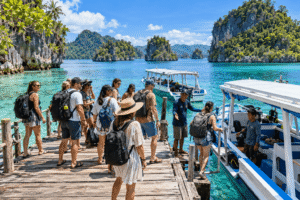
A clear sky does not always mean a safe boat crossing. Indonesia’s meteorological agency, BMKG, has issued high-wave warnings for Banggai waters, highlighting why sea conditions deserve as much attention as your hotel booking.
So, is Banggai Islands safe for tourists? It can be a rewarding destination for well-prepared visitors, but responsible planning matters. Rather than treating it as risk-free, check current local conditions, choose transport carefully, and understand how to get help.
For domestic travelers and international visitors alike, the goal is simple: enjoy the lakes, beaches, and island scenery without letting avoidable problems shape your holiday.
Is Banggai Islands Safe for Tourists Visiting for the First Time?
There is no reliable destination-specific crime figure in the sources reviewed that supports calling Banggai completely safe. Australia’s travel advisory recommends exercising a high degree of caution in Indonesia overall, with warnings about crime, natural disasters, marine transport, and adventure activities.
However, nationwide advice is not a description of every village or island. Check your own government’s latest advisory, then ask your accommodation or local travel partner about conditions along your actual route.
Use ordinary precautions throughout your trip. Keep valuables discreet, avoid isolated places after dark, and stay away from demonstrations or situations that feel uncomfortable. These habits align with Indonesia’s broader travel-safety guidance.
Respect also helps trips run smoothly. Dress appropriately in villages, ask permission before photographing people, and follow local guidance around religious or culturally sensitive places.
Where Your Journey Takes You Matters
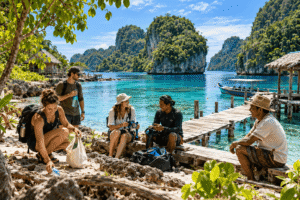
Explorer Banggai’s itineraries combine places around Luwuk with island destinations, including Paisupok Lake, Poganda Beach, and other coastal attractions. Its website identifies Luwuk Airport as the arrival gateway, followed by speedboat or ferry transfers for island travel.
That means your holiday may involve flights, road transfers, boat crossings, and outdoor activities. Each stage needs its own safety check, rather than a single yes-or-no judgment about the destination.
Before booking, ask for a clear route showing where you will sleep, which days involve sea travel, and what happens if a crossing is postponed. A beautiful itinerary should also have room for practical adjustments.
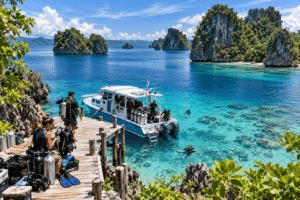
How to Make Sea Transport Safer
Boat travel deserves particular attention. Indonesia’s official travel advice warns that commercial and private vessels may not meet international safety and maintenance standards, while BMKG has specifically highlighted hazardous wave conditions in Banggai waters.
A private boat is not automatically safer than a ferry. What matters is the vessel’s condition, its suitability for the route, passenger loading, safety equipment, and the crew’s decisions.
Check Before You Board
Ask your operator about the following before agreeing to a crossing:
- Properly fitting life jackets for everyone, including children.
- Passenger capacity and whether the boat will carry excessive luggage.
- Working communication equipment and emergency procedures.
- The latest marine forecast for the intended route.
- The alternative plan if conditions become unsafe.
These checks reflect the questions recommended in official guidance for boat trips and adventure activities. If equipment is missing or answers are unclear, choose another service or postpone the journey.
Wear your life jacket during the crossing, not simply when the water becomes rough. Most importantly, never pressure a captain to depart because your itinerary is running late.
When Should You Check the Weather?
Check conditions before booking weather-sensitive activities, again before departure, and before each sea crossing. BMKG warnings are time-sensitive, so an old forecast or a general seasonal recommendation cannot confirm that today’s route is safe.
Rain, wind, and sea conditions should influence your schedule. Leave a buffer between an island return and your flight, and avoid building a trip that depends on every transfer operating exactly as planned.
Let Conditions Shape Outdoor Activities
Swimming and snorkeling require their own assessment. Official advice warns that many Indonesian beaches are unpatrolled and that rough water and strong currents can make swimming dangerous.
Ask about local conditions before entering the water, stay with a companion, and avoid swimming near moving boats. For diving, confirm equipment, emergency arrangements, and insurance coverage before committing.
Likewise, postpone waterfall walks or hikes when heavy rain makes access unsafe. A flexible day is better than forcing an outdoor activity through deteriorating weather.
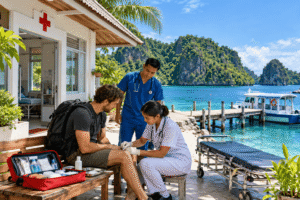
What Healthcare Is Available?
Banggai Kepulauan has a public hospital, RSUD Trikora Salakan, listed by Indonesia’s Ministry of Health. However, the existence of a hospital does not guarantee that every specialist service, medication, or emergency procedure is available when needed.
Indonesia’s broader travel guidance notes that regional hospitals may provide only basic facilities. Before staying somewhere remote, ask where the nearest clinic is and how a serious illness or injury would be transferred for further treatment.
Prepare Before Leaving Home
Bring necessary legal medication in its original packaging, along with prescriptions where appropriate. International visitors should check Indonesian medication rules, since some medicines permitted at home are restricted in Indonesia.
Choose insurance that covers your planned activities and medical evacuation. Also carry insect repellent, drink safe water, and discuss relevant vaccinations and health risks with a qualified clinician before departure.
Travelers with significant medical conditions should review the proposed route with their doctor. The key question is not just whether care exists, but whether suitable care can be reached promptly.
How to Stay Connected During the Trip
Before leaving Luwuk, ask your accommodation and guide which mobile provider works along your specific route. Do not make essential arrangements dependent on continuous internet access.
Download maps, save booking details offline, and carry a charged power bank. Share your itinerary with someone at home and agree on check-in times, especially before boat trips or remote excursions.
International visitors should also confirm whether their guide can communicate comfortably in English. Clear explanations about meeting points, weather changes, and medical needs matter more than a quick booking conversation.
Treat these steps as a backup plan, not evidence that every island has poor reception. Coverage should be checked for the places you will actually visit.
Who Should You Contact in an Emergency?
Save these Indonesian emergency contacts before traveling:
- Police: 110.
- Medical emergencies: 119.
- Ambulance assistance: 118.
- General emergency assistance: 112, where locally implemented.
Emergency numbers are exact identifiers, not estimates. Do not assume that a call guarantees an immediate response at a remote location.
Also save your accommodation, guide, nearest healthcare facility, insurer, and embassy or consulate contacts. If an emergency occurs, give your location, nearby landmark, and the nature of the problem; ask a local person to help communicate if necessary.
Explore Banggai With a Practical Plan
Explorer Banggai offers open trips, private trips, and customized itineraries covering lakes, waterfalls, beaches, and island experiences. Its services include Luwuk Airport pickup, flexible itineraries, and transparent pricing without hidden fees, according to its website.
For first-time visitors, that provides a starting point for coordinating transfers and discussing practical concerns. Before booking, ask specifically about boat equipment, weather-related changes, communication, and access to medical help.
Is Banggai Islands safe for tourists? The most useful answer is that preparation makes a meaningful difference: check current conditions, prioritize safe transport, and know your emergency options. Contact Explorer Banggai to discuss an itinerary that balances memorable experiences with sensible travel planning.