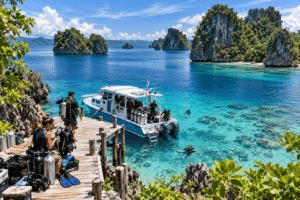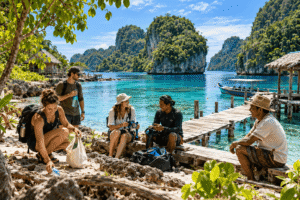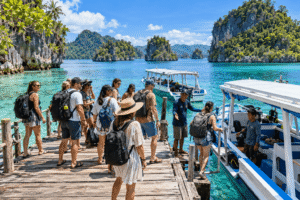
Tarsius spotting Luwuk Banggai offers a rare chance to meet one of Sulawesi’s most fascinating nocturnal animals in its natural forest habitat. With enormous round eyes, agile movements, and a quiet presence among the trees, the tarsier can turn an ordinary evening in Banggai into a wildlife experience you will remember long after the trip ends.
For wildlife lovers, photographers, families, and curious travelers, Luwuk Banggai is more than a place for turquoise lakes, white-sand beaches, and dramatic waterfalls. It is also a gateway to tropical landscapes where nature becomes more alive after sunset. The key is knowing where to go, when to arrive, and how to observe responsibly.
Why Tarsius Spotting Luwuk Banggai Is Worth It
Tarsiers are small primates known for their strikingly large eyes and exceptional ability to navigate the forest at night. They are insect hunters, and their quick jumps between branches can be surprisingly difficult to follow without an experienced local guide.
Unlike a zoo encounter, tarsius spotting Luwuk Banggai happens in a natural setting. You may hear the evening forest first: insects calling, leaves rustling, and distant bird sounds. Then, with patience and a soft flashlight beam, you may notice a pair of bright eyes watching from a low branch.
This is what makes the experience special. It is not only about taking a photograph, but also about slowing down and appreciating the fragile rhythm of Sulawesi’s forest life.
Where to Look for Tarsiers in Luwuk Banggai
The most promising areas are generally forest edges, quiet rural landscapes, secondary forests, and tree-covered zones near local settlements. Tarsiers often use dense vegetation, bamboo clusters, shrubs, and small trees as daytime shelter and nighttime pathways.
Because wildlife movement changes with weather, season, habitat condition, and human activity, there is no guarantee of seeing a tarsier at one fixed point. A flexible approach and local knowledge make a significant difference.
Forest Edges and Village Surroundings
Forest edges near villages can be productive because they combine natural vegetation with a relatively accessible walking route. Tarsiers may emerge from their sleeping sites in dense plants, bamboo, or hollow tree spaces shortly before dusk.
These locations are often easier for first-time visitors, families, and travelers who do not want to hike deep into the jungle. However, quiet behavior is essential because noise can cause wildlife to retreat before you have a chance to observe it.
Jungle Routes Near Nature Attractions
A Banggai itinerary can combine tarsier observation with a jungle-based adventure near waterfalls, caves, or forest trails. Places around Air Terjun Piala, Air Terjun Laumarang, Air Terjun Kamumu, Air Terjun Kokungan, Gua Babanang, and Gua Susundeng offer the kind of lush surroundings that make a wildlife-focused outing feel more immersive.
The exact observation route should always be selected with a local guide. They understand which paths remain safe after dark, where tarsiers have recently been active, and how to reduce disturbance to both animals and nearby communities.
Quiet Green Areas Away From Crowds
The best tarsier encounter is rarely found in a busy or brightly lit area. Look for calm green zones with limited vehicle traffic, fewer visitors, and a healthy mix of mature trees and undergrowth.
A private wildlife outing can be especially useful for photographers or travelers with a strong interest in nature. It allows more time for listening, waiting, and adapting the route without rushing to the next destination.
When Is the Best Time to See Tarsiers?
Tarsiers are nocturnal, so the best time for tarsius spotting Luwuk Banggai is around sunset and the early evening. They are often most active when daylight begins to fade and the forest transitions into night.
Arriving before dark is important. It gives you time to walk quietly into the area, understand the route, and position yourself near likely habitat without suddenly entering the forest with strong lights.
The Golden Window at Dusk
The period just before and after sunset is usually the most rewarding window. Tarsiers may leave their resting places to begin hunting for insects, and their calls can sometimes help guides locate them.
This time also creates a beautiful atmosphere for nature photography. The soft remaining daylight can help you capture the environment before switching to low-light techniques once night falls.
Weather and Seasonal Considerations
A dry evening is generally more comfortable for walking and observing. Trails are easier to manage, and rain is less likely to interrupt visibility or make forest routes slippery.
That said, nature does not follow a fixed schedule. Even during favorable conditions, wild animals may stay hidden. Treat the experience as a respectful search rather than a guaranteed performance.
What to Bring for a Responsible Wildlife Walk
Preparing the right gear helps you stay comfortable while reducing impact on wildlife. You do not need excessive equipment, but a few practical essentials can make the experience safer and more enjoyable.
- A small flashlight or headlamp with a low-light or red-light setting
- Comfortable closed shoes with good grip for uneven paths
- Lightweight long sleeves and long trousers for forest protection
- Drinking water and insect repellent
- A rain jacket or compact poncho during wetter months
- A camera with good low-light capability, if photography is your priority
- A small day bag that leaves your hands free while walking
Avoid carrying loud music speakers, powerful flashlights, or bulky equipment that slows the group down. The quieter and lighter you travel, the better your chances of having a meaningful encounter.
Why a Local Guide Matters
A local guide is not just someone who shows the route. They can help interpret animal behavior, identify calls, choose suitable observation distances, and adjust the plan according to recent conditions.
Guides also know the local context. They can help visitors respect private land, village customs, trail safety, and sensitive wildlife areas. This is particularly valuable when traveling with children, first-time jungle visitors, or photographers who need time to set up responsibly.
Explorer Banggai can help arrange a tarsier-focused experience as part of an open trip, private trip, or custom itinerary. The journey can be paired with favorite Luwuk Banggai destinations such as Danau Paisupok, Pulo Dua, Teluk Kawalu, Danau Ubur Ubur, Pantai Poganda, Pantai Oyama, Long Beach, or Batu Lubang.
Tarsier Watching Ethics Every Visitor Should Follow
Seeing a tarsier in the wild is a privilege, not an attraction to control. Responsible behavior protects the animal and helps ensure that future travelers can enjoy the same experience.
Keep Your Distance
Do not approach, touch, feed, or attempt to hold a tarsier. These are wild animals, and close contact can cause stress or disrupt their normal movement.
Let the animal decide how close it feels comfortable being. A distant but calm sighting is far better than a close encounter that disturbs its habitat.
Use Light Carefully
Never shine a bright flashlight directly into a tarsier’s eyes for a long period. Their eyes are highly adapted to darkness, so harsh light can be uncomfortable and disorienting.
Use the lowest practical light setting, point the beam toward nearby branches rather than directly at the face, and switch it off once you have observed the animal.
Skip Flash Photography
Flash photography can startle nocturnal wildlife and may interfere with natural behavior. If your camera cannot capture images without flash, enjoy the moment with your eyes instead.
A respectful wildlife memory does not always need a perfect photograph. Sometimes the sound of the forest and a brief glimpse of a tarsier are the most authentic souvenirs.
Stay Quiet and Leave No Trace
Keep conversations low, silence phone notifications, and follow the guide’s instructions. Do not leave food packaging, plastic bottles, or any waste along the trail.
Small actions make a real difference. Quiet visitors are more likely to see wildlife, and clean habitats remain healthier for the animals that depend on them.
Plan Your Wildlife Escape in Banggai
Tarsius spotting Luwuk Banggai is an unforgettable addition to a broader Sulawesi adventure. It brings you beyond the famous clear lakes, coral-rich waters, island escapes, and waterfalls, revealing a quieter side of Banggai that comes alive after sunset.
For the best experience, plan ahead, travel with a knowledgeable local guide, bring suitable low-impact gear, and let wildlife set the pace. Contact Explorer Banggai through explorerbanggai.com to arrange an open trip, private trip, airport pickup from Syukuran Aminuddin Amir Airport Luwuk, or a flexible custom itinerary that combines responsible tarsier watching with the natural highlights of Luwuk Banggai.