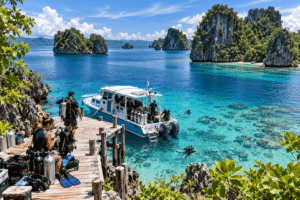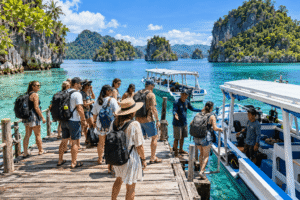
Few divers realize that the waters around Banggai are home to one of the smallest recorded ranges of any marine fish species on earth. The Banggai cardinalfish, with its striking black and white stripes and long flowing fins, exists naturally in a habitat spanning less than 5,500 square kilometers, almost entirely within the Banggai Archipelago itself. Nowhere else in the world will you find this fish living freely in the wild. That single fact tells you something important about Banggai diving: this is not just another stop on the Coral Triangle circuit, it is a genuinely unique underwater world that rewards travelers willing to venture off the well worn dive trail.
For anyone chasing untouched reefs, rare endemic species, and a diving scene that still feels wonderfully uncrowded, Banggai diving deserves a serious look.
Why Banggai Stands Out in the Coral Triangle
The Coral Triangle is often described as the epicenter of marine biodiversity, and Banggai sits comfortably within its boundaries. What sets this region apart from busier diving hubs like Bali or Raja Ampat is the sense of discovery that still lingers here. Reefs are healthy, fish populations are abundant, and dive sites rarely see more than a handful of boats in a day.
This relative obscurity is a double edged sword. On one hand, infrastructure is simpler and logistics take a bit more planning. On the other, divers get access to sites that feel personal rather than crowded, with dive guides who genuinely know every corner of the reef because they grew up around it.
Top Dive Sites Around Banggai
Bone Baru and the House Reef Systems
Close to shore, Bone Baru offers gentle slopes that are ideal for spotting the Banggai cardinalfish among sea anemones and branching corals. The shallow depth here also makes it a favorite for underwater photographers who want soft natural light without needing heavy strobes.
Outer Reef Walls
Further from the main islands, steep walls drop into deeper blue water where pelagic encounters become more likely. Expect strong currents in some spots, which is exactly what draws in schooling fusiliers, trevally, and occasional reef sharks patrolling the drop off.
Muck Diving Spots
For divers who love hunting small critters, several sandy and rubble bottomed sites around the archipelago offer classic muck diving conditions. Nudibranchs, ghost pipefish, and mimic octopus sightings are not uncommon for patient eyes with a good torch.
Marine Life You Can Expect to See
Banggai waters host a wide mix of macro and mid sized marine life, which keeps every dive interesting regardless of experience level.
- Banggai cardinalfish, found almost exclusively in this region
- Colorful nudibranchs and various species of pipefish
- Reef sharks and schooling pelagics along outer walls
- Healthy hard and soft coral gardens supporting reef fish diversity
Because the region has not been heavily commercialized, many reef systems remain in near pristine condition, which biologists often point to as a sign of low fishing pressure and sustainable local practices.
Best Season and Water Conditions for Diving
Diving conditions around Banggai are generally favorable for much of the year, though the calmest seas and best visibility tend to fall during the drier months. Outside of the peak monsoon period, water temperatures stay comfortable and visibility can extend well beyond typical rainy season averages.
It is worth checking seasonal wind patterns before booking, since currents around certain outer sites can shift depending on the time of year. A local operator familiar with the archipelago will usually have the most accurate read on current conditions for any given week.
Difficulty Level and Who Should Dive Here
Banggai diving suits a fairly broad range of experience levels. Sheltered bays and shallow reef systems are approachable for newer certified divers, while the outer walls and current swept channels are better suited to those with more logged dives and comfort handling drift conditions.
Divemasters typically assess group experience before choosing a site for the day, so first timers and seasoned divers can often join the same trip with sites adjusted accordingly.
Access, Logistics, and What to Bring
Reaching Banggai usually involves a domestic flight connection followed by a boat transfer, so building in a little extra travel time is wise, especially for multi day dive trips. Local guides can help arrange transport between the mainland and the islands, which simplifies the process considerably for first time visitors.
As for gear, a 3mm wetsuit is generally sufficient given the warm water temperatures, though some divers prefer a bit more coverage for multiple dives per day. A reliable dive torch is highly recommended for muck diving sites, and an underwater camera with a macro lens will make the most of the region’s smaller marine residents. Renting equipment locally is possible, but bringing your own mask and fins is always a good idea for comfort and fit.
Diving costs in Banggai tend to be more affordable compared to more established diving destinations, though exact pricing varies depending on the number of dives, boat distance, and whether accommodation is bundled into the package.
Practical Tips for a Smooth Diving Trip
A little preparation goes a long way when diving in a less developed destination like Banggai.
- Book dive trips in advance, especially during peak travel months
- Bring cash for local expenses, since card facilities can be limited on smaller islands
- Confirm certification requirements with your chosen operator beforehand
- Pack reef safe sunscreen to help protect the coral ecosystems you are there to enjoy
Working with an experienced local operator also makes a noticeable difference, since they understand tidal patterns, seasonal marine life movement, and which sites suit the day’s conditions best.
Explore Banggai’s Underwater World with Local Experts
Planning a diving trip to a region like this is far easier with a team that knows the islands intimately. Explorer Banggai has spent years guiding travelers through the wonders of Luwuk and the Banggai Archipelago, from open trips and custom itineraries to snorkeling, hiking, and diving experiences tailored to different interests and skill levels. Their local knowledge covers not just dive sites but also the logistics of getting around, so visitors can focus on enjoying the experience rather than figuring out transport and permits.
For travelers who want the full picture, including current trip schedules, package options, and the latest updates on diving conditions around Banggai, visiting https://explorerbanggai.com is the best next step or contact WhatsApp at +62 815-4311-9267 before choosing your trip.
Final Thoughts on Diving in Banggai
Banggai diving offers something increasingly rare in today’s travel landscape: reefs that still feel wild, marine life found nowhere else on the planet, and a diving culture built around genuine local expertise rather than mass tourism. Whether you are drawn by the endemic cardinalfish, the promise of quiet outer reef walls, or simply the appeal of exploring somewhere off the beaten path, this corner of Sulawesi delivers.
If you are ready to see it for yourself, reach out to Explorer Banggai to start planning your dive itinerary and discover why this region deserves a spot on every serious diver’s list.